|
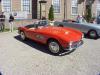
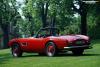
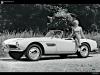
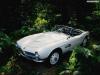
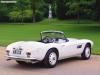
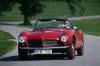
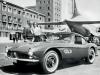
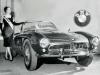
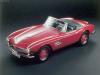
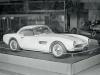
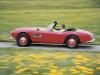
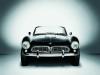
To some observers, the creation of the BMW 507 in 1955 must have seemed an act of marketing madness.
Here was a company, struggling to stay alive in the car business, suddenly introducing a V-8-powered roadster that was
even more expensive than the vaunted Mercedes 300SL "Gullwing."
The 507 was the brainchild of U.S. BMW importer Max Hoffman, who was also responsible for Mercedes bringing out
the 300SL as a production automobile and for the Porsche Speedster, a car built exclusively for the American market to compete with
the likes of the Austin-Healey.
With styling by Count Albrecht Goertz and a tweaked and punched-out version of the Ohv V-8 that was powering
BMW's slow selling 502 model, the 507 was a sleek and swift competitor and a worldwide image builder for the Bavarian automaker.
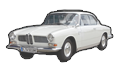
Fritz Fiedler designed the chassis, which was shared with the more sedate BMW 503 series cars.
The 507 was a complete departure for BMW at that time, harking back to the days of the prewar 327s with their
enviable record of rally and racing successes. Up to that time BMW's prestige cars were the 501s and 502s, bulbous sedans that
looked like oversized sausages on wheels. The 507 was a true sports car, albeit a somewhat heavy one with its all-steel body
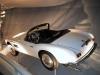
topping the car out at a ton-and-a-half ready for the road. The optional removable steel hardtop added to the weight as well.
This sporty Bimmer offered plenty of satisfying straight-line performance from the V-8 engine, and the dual exhausts
delivered a delightful burble at idle, changing to a lusty rumble when the go-pedal was pressed hard through the gears.
But the weight extracted a penalty in its handling through the corners and the drum brakes were never quite up to the car's speed potential.
This was improved in the last batch of cars, built in 1959 when front discs were added.
With a list price of over $9,000 at a time when a '57 Chrysler 300 delivered for half that money, the 507 was never
expected to gain vast public acceptance. Rather, it was produced to put the motoring world and BMW's competitors on notice that the
venerable motorcar manufacturer was back in the game to stay. At the end of the three-year run only 253 cars had been built, but this
minuscule number left an indelible impression on the motoring enthusiasts who saw or experienced the cars.
Today, even the shabbiest example will cost six figures to buy and concourse-ready cars approach the 300SL in collector value.
Their survival rate has been impressive, perhaps because from the time they were new they were always regarded as special cars, which
they most certainly were and remain today. Indeed, the new BMW Z-8 can be regarded as the 507's direct descendant-a compliment to the
original concept, which is still a viable starting point for today's new supercar from Bavaria.
|