|
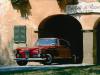
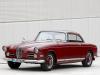
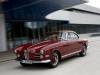
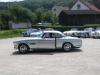
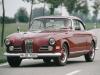
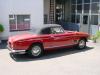
The 503 was one way in which BMW hoped to crack the American market in the mid 1950s.
The Baroque Angel saloons were not going to sell well in the USA, but BMW thought that an elegant grand tourer with the saloons
running gear and powerful V8 engine might.
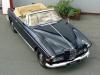
The 503 used the saloon's perimeter frame chassis as well as it's running gear and it had an all-alloy body
designed by Albrecht Goertz. Goertz was a German who had worked with the Raymond Loewy design studio on Studebakers in the late
1940s and early 1950s, then became a naturalised American and set up his own design studio. he was persuaded to submit designs
for the 503 (and the 507) by BMW's American importer, Max Hoffmann. Tempted by Hoffmann's offer to take a Goertz-designed 503
in quantity, BMW embraced the Goertz proposals and showed a prototype at the 1955 Frankfurt motor show. Production began the following May.
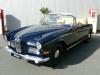
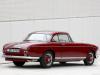
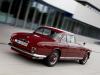
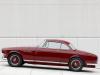
Sadly, the 503s styling was flawed. The long bonnet hinted at power, but was spoilt by an ugly snub nose
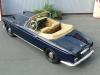
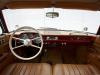
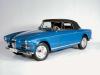
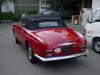
incorporating the traditional BMW grille. Electric windows were advanced for the time and the power operated hood on cabriolets was
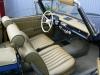
a first for a German car. But the saloon gearbox, mounted between the seats and operated by a woolly column change, did the 503 no favours.
After September 1957 however, the gearbox was adapted so that a floor mounted change could be fitted.
The 503 was always an exclusive car, competing with such exotics as the (more costly) Mercedes-Benz 300SC and
the Bentley Continental. Production averaged no more than 100 or so a year and it is likely that no two examples were ever
exactly alike. Only a handful were delivered with right-hand drive. Despite their undeniable aesthetic shortcomings, the cars are
very much sought-after today, however.
|