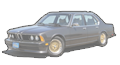
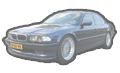
|
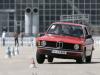
The story of the 3-Series technically begins in July 1975, when the first cars were unveiled to the press, but it really goes back further than that. The Michelotti-styled so-called 'New Class' 1500, 1600, 1800 and 2000 saloons of the early and mid-1960s set BMW's template: roomy midsize, four-door, five-seater models, compact yet finished on a level comparable with much larger luxury cars, and distinguished by sporting suspension and an emphasis on rewarding handling. They helped restore BMW's flagging finances and reputation, and laid the way for the 5-Series as we know it today. The predecessors to the 3, however, were the 02-Series models, derived from the 1500 but with two doors, a roof 4cm lower, a flatter windscreen, round headlamps and circular taillights. The first 1600-2 - unveiled at the Bavarian State Opera House in March 1966 - was one of the fastest cars of its type; it was followed by the 1502 and 2002, and by the time the 3-Series was launched in 1975, nearly 340,000 02s had been produced.
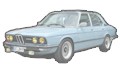
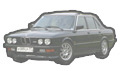
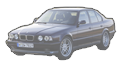
The 5-Series (1972) introduced BMW's new naming policy and new design characteristics: a lower waistline, larger windows and twin headlines, its minimal lines the result of French designer Paul Bracq's first foray into computer-aided design and the first BMW to be developed with the help of crash simulation calculations. The 3-Series, also designed by Bracq, took a similar approach, though it was a little more wedge-shaped to the rear. As with the 5, it had a plain, simple cabin, but was the first BMW to feature a centre console and cockpit angled entirely towards the driver, something to become a fixture in most subsequent BMWs.
|