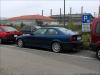
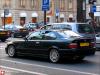
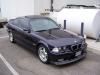
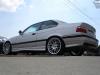
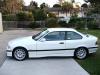
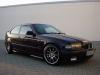
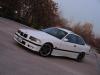
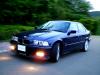
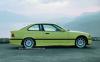
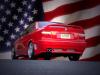
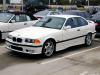
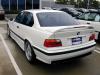
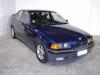
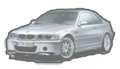
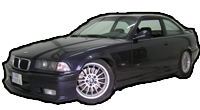
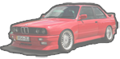
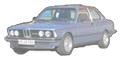
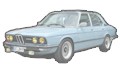
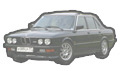
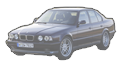
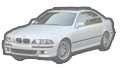
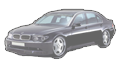
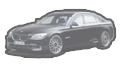
| BMW 316i |
Available in saloon, compact and coupe |
| Engine size |
1596 cc, in-line |
| Cylinders/Valves |
4/8 |
| Max power |
102hp/5500rpm |
| Max torque |
111 lb ft/3900rpm |
| Top speed |
195km/h (192 for automatic transmission) |
| 0-100km/h |
12.7s (14.2 for automatic transmission) |
| BMW 318i |
Available in saloon and cabriolet |
| Engine |
1796 cc, in-line |
| Cylinders/Valves |
4/8 |
| Max power |
115hp/5500rpm |
| Max torque |
124 lb ft/3900rpm |
| Top speed |
Saloon 201km/h (200 for automatic transmission) / Cabrio 194km/h (189 for automatic transmission) |
| 0-100km/h |
Saloon 11.3s (12.3 for automatic transmission) / Cabrio 12.5s (13.7 for automatic transmission) |
| BMW 318is |
Available in coupe and saloon |
| Engine |
1796 cc, in-line |
| Cylinders/Valves |
4/16 |
| Max power |
140hp/6000rpm |
| Max torque |
129 lb ft/4200rpm |
| Top speed |
213km/h (207 for automatic transmission) |
| 0-100km/h |
10.2s (11.6 for automatic transmission) |
| BMW 320i |
Available in saloon, coupe and cabriolet |
| Engine |
1991 cc, in-line |
| Cylinders/Valves |
6/24 VANOS* |
| Max power |
150hp/5900rpm |
| Max torque |
140 lb ft/4200rpm |
| Top speed |
Coupe/saloon 214km/h (214 for automatic transmission) / Cabrio 211km/h (207 for automatic transmission) |
| 0-100km/h |
Coupe/saloon 9.9s (10.6 for automatic transmission) / Cabrio 10.6s (11.4 for automatic transmission) |
| BMW 323i |
Available in saloon and coupe |
| Engine |
2494 cc, in-line |
| Cylinders/Valves |
6/24 VANOS* |
| Max power |
170hp/5500rpm |
| Max torque |
181 lb ft/3950rpm |
| Top speed |
227km/h (224 for automatic transmission) |
| 0-100km/h |
8.0s (9.0 for automatic transmission) |
| BMW 328i |
Available in saloon, coupe, cabriolet and touring |
| Engine |
2793 cc, in-line |
| Cylinders/Valves |
6/24 VANOS* |
| Max power |
193hp/5300rpm |
| Max torque |
206 lb ft/3950rpm |
| Top speed |
Saloon/coupe 236km/h (232 for automatic transmission) / Cabrio/touring 230km/h (227 for automatic transmission) |
| 0-100km/h |
Saloon/coupe 7.3s (7.8 for automatic transmission) / Cabrio/touring 7.7s (8.4 for automatic transmission) |
| BMW M3 |
Available in 3 bodystyles, saloon, coupe and cabriolet |
| Engine |
2990 cc, in-line |
| Cylinders/Valves |
6/24 |
| Max power |
286hp/7000rpm |
| Max torque |
320Nm/3600rpm |
| Top speed |
250km/h (Electronic limit) |
| 0-100km/h |
Saloon/coupe 6.0s / Cabrio 6.2s |
| Gearbox |
5 speed manual |
| BMW M3 (Evolution) |
Available in 3 bodystyles, saloon, coupe and cabriolet |
| Engine |
3201 cc, in-line |
| Cylinders/Valves |
6/24 double VANOS* |
| Max power |
321hp/7400 rpm |
| Max torque |
258 lb ft/3250rpm |
| Top speed |
250km/h (Electronic limit) |
| 0-100km/h |
Saloon/coupe 5.5s / Cabrio 5.6s |
| Gearbox |
6 speed manual |