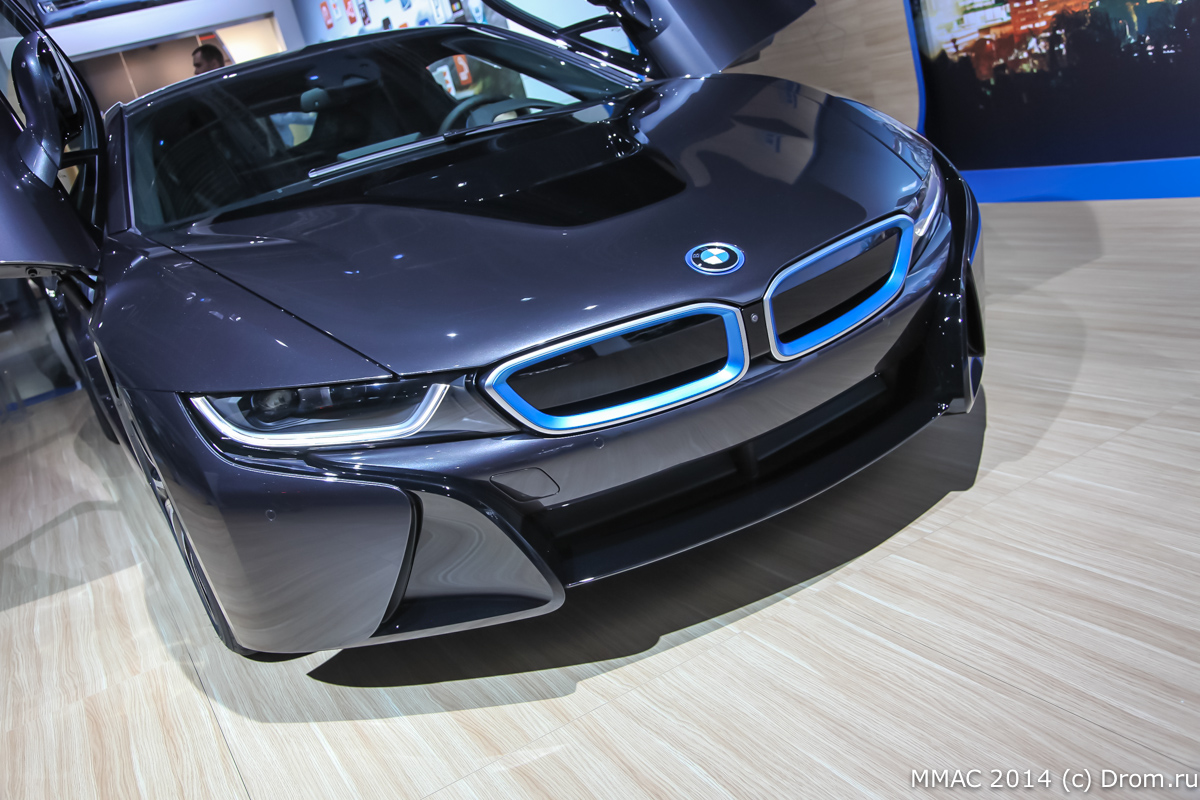
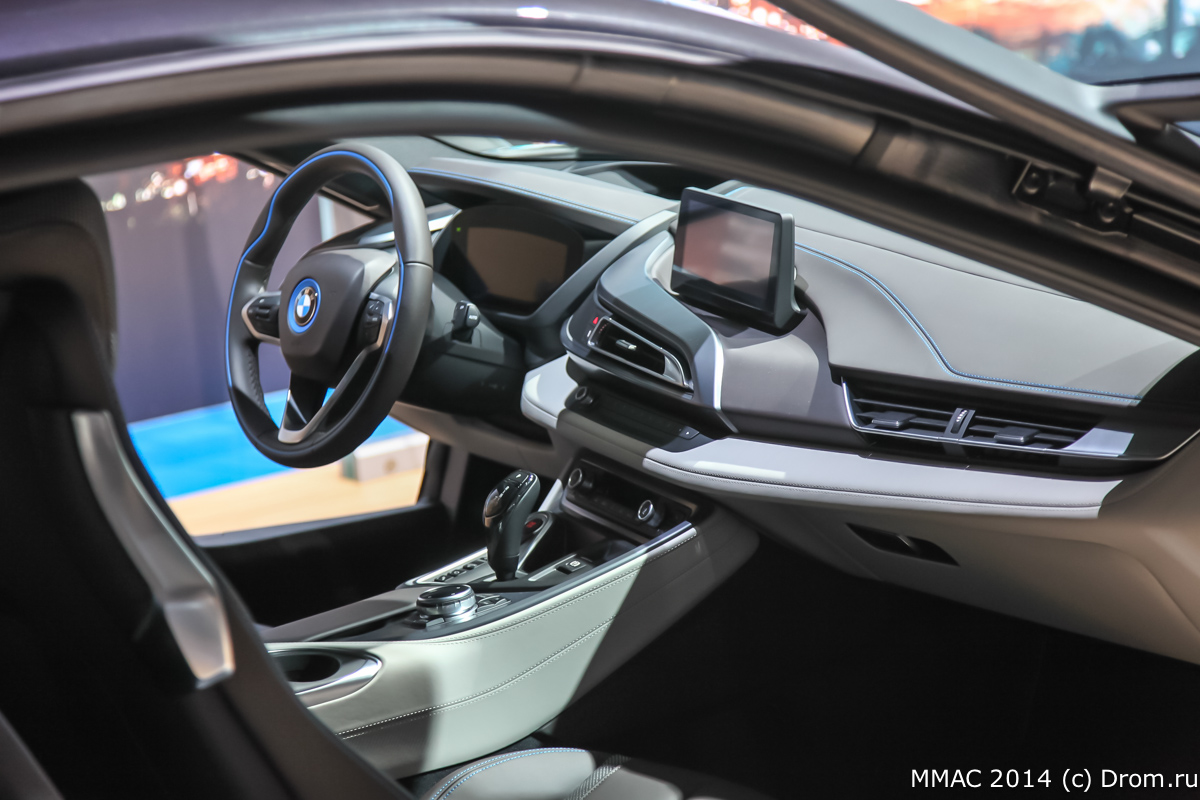
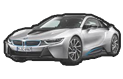
Most of the good ideas described above are employed here too, only the demands of a low-slung sports car preclude the placement of a giant battery pack under the floor. Here the batteries fill a central tunnel, as in the Chevy Volt. This pack is much smaller (7.2 kW-hr), and its lithium-ion chemistry is biased toward delivering power quickly. Its energy powers an electric motor located at the front of the car, while a three-cylinder turbocharged engine drives the rear wheels through an automatic transmission. There is no electrical connection between the front and rear axles, meaning they''re only connected through the road.
The front axle gets 129 horsepower and 184 pound-feet of torque routed through a single-speed gear reduction transmission. It''s said to be capable of providing 20 miles of plug-in electric range. The rear gets a 3.0-liter DOHC BMW engine cut in half that''s balance-shafted to compensate for the first- and second-order moment imbalances. With a turbocharger, direct injection, Valvetronic and all of BMW''s other efficient/dynamic tricks, it kicks out 220 horsepower and 221 lb-ft. We were given no details about the transmission, except that it''s "an automatic in the BMW family," which led most to expect the 6-speed from the Mini. But by 2014 the ZF 9-speed auto will also be "in the family," and that would seem a better match for the seamless acceleration of the single-speed front transmission. The i8''s cooling system will be complex, as the battery pack, power electronics, electric motor, engine, and turbo intercooler all like to run at different temperatures. Considerable development work is ongoing in that area.
Just two large doors pivot open about the A-pillars, providing access even in tight spaces for both front and rear passengers to climb in and out of the dramatic cockpit. Once inside, the combined 349 hp and 405 lb-ft are said to whisk the 3250-pound car to 62 mph in 4.6 seconds en route to a governed 155-mph top speed (at least a few times, until that battery pack depletes, leaving the front axle limp). Combined fuel economy is said to be as high as 80 mpg -- not bad for a slinky, low-slung supercar. The i8 may arrive a bit after the i3, and it''s anybody''s guess what the price will be. Given all the technology in play here and the likely price of other hybrid supercars like the Porsche 918, we recommend saving up at least $100,000 between now and 2014.
German Formula One driver Nick Heidfeld of BMW Sauber does some burnouts under the eyes of thousands of BMW employees at the carmaker''s headquarters in Munich, Germany, 23 April 2008. The BMW Sauber Formula One team thanked its staff for the support.
G-Power, the maker of some of the fastest and meanest tuned BMW models around, has presented its first take on the brand-new 2012 M5 sedan [F10]. At the heart of G-Power''s tune is BMW''s 4.4-liter twin-turbocharged V8 engine that normally produces 560-horsepower and a peak torque of 680 Nm (502 lb-ft) from 1,500 rpm.
After the German company''s engineers update the ECU and add a new custom exhaust system, the V8''s output is lifted to 640-horsepower and 777Nm (573 lb-ft).
As a result, the M5 completes the 0-100km/h (62mph) sprint in 3.9 seconds (vs. the standard model''s 4.4 seconds) and reaches the 200km/h (124mph) mark in just 11.9 seconds.
To improve handling, G-Power has fitted the M5 with the height-adjustable coil-over suspension "GM5-RS" with nine selectable settings for bound and rebound, along with a new braking system (396 mm discs with six callipers), and 21-inch alloy wheels wrapped around Michelin Pilot Super Sport tires (265/30 ZR 21 at the front and 305/25 ZR 21 at the rear).
G-Power noted that it is also working on a successor to the 800-horsepower M5 Hurricane RR, which is considered to be the faster sedan model in the world with a top speed of 372km/h (231mph).